




01
The coupon has a structure
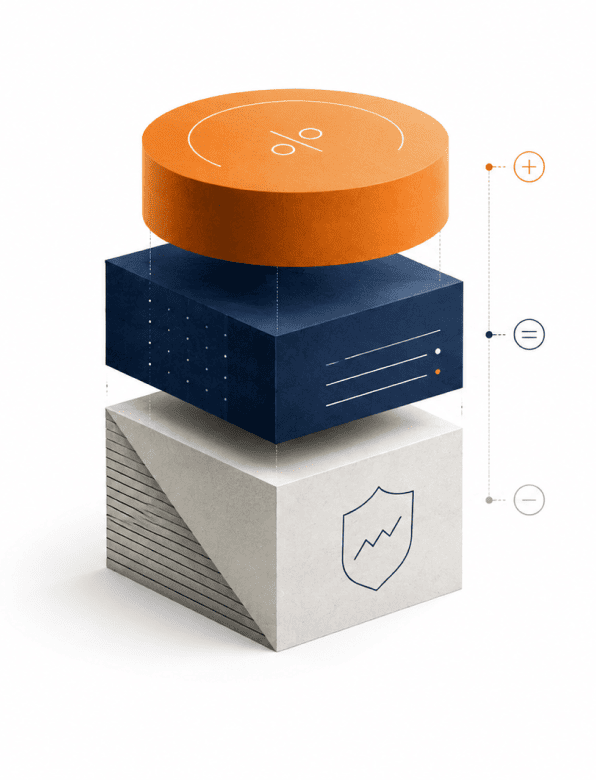
Structured-product returns are created through a combination of lending, options, and downside risk. Understanding those components makes the quoted coupon easier to evaluate.
Live webinar
High headline coupons look attractive, but the numbers alone don't reveal the hidden mechanics. Join us to learn how the coupon is built, where the downside sits, and what you must understand before evaluating these products.
Register for the WebinarHosted by Lati Capital, an SEC-registered investment advisor. Quoted coupons are not guaranteed. This webinar is for education and is not an offer to buy or sell securities.

Can't make the live session?
Register anyway. We'll send the recording.
Why this topic matters
A high coupon can look like simple income, but the real question is what creates that return, what has to happen for you to receive it, and what happens when the scenario breaks.
Structured-product returns are created through a combination of lending, options, and downside risk. Understanding those components makes the quoted coupon easier to evaluate.
The question is not simply whether 12% is attractive. It is what has to happen for you to receive that return.

When the barrier is breached, the outcome can look very different from when it isn't. The coupon only makes sense when considered together with that risk.

Many of these notes are autocallable: if the underlying meets the set condition on an observation date, the issuer redeems it early and returns your principal – before the term you originally planned for. Your actual holding period can end up shorter than expected.

What you will learn
The session follows the mechanics in order: how the product works, why the headline coupon sits above ordinary interest, what the bank wrapper adds, and what changes if that wrapper is removed.
A simple structured product example
You invest [Amount]. The product offers [Coupon]% if the underlying remains above a predefined barrier.
If the underlying stays above that level, the coupon is paid and principal is returned in full.
If it finishes below the barrier at maturity, you may not get cash back. You may receive shares worth less than the original investment.
This is the kind of example we walk through live: practical, not theoretical.


What is usually behind the headline yield
A structured-product coupon generally combines compensation for lending money to the issuer with compensation for accepting a specific market risk. The webinar will break down both components and show how the economics work between the investor, the bank, and the underlying market.
Those two components are a bond piece and an equity-risk piece: interest for lending to the bank, and extra coupon for taking on downside if the underlying finishes below the barrier when coupons are due and at maturity.
The bank wrapper, the legal packaging that turns the formula into a tradeable note, is also where issuer credit risk, the absence of a meaningful secondary market, and distribution and structuring costs enter the picture. That is the second problem the session addresses.
That same formula, the same two components, can be built directly in an investment account without the bank issuing a note. The bank's version is contractual. The direct version targets the same outcome but does not guarantee it.
Evaluation framework
You should leave with a framework for evaluating structured products, not just a definition of how they work. After the webinar, you should better understand:
That comparison includes the real trade-off at the center of the session: a bank‑issued note provides a contractual payoff. Building the same formula in an account produces a target outcome that is not guaranteed.
Who you'll hear from
Quant and Derivatives Expert
Former Goldman Sachs, Morgan Stanley, and AQR Capital. Has created structured products, fixed index annuities, and related products of the type discussed in this session.
Hosted by

 SEC-Registered
Investment Advisor
Lati Capital develops account-based investment strategies designed around structured payoff profiles and market scenarios. SEC registration does not imply a certain level of skill or training.
Final registration
Join the webinar to understand the economics, risks, and trade-offs behind structured-product returns.
No product pitch. Methodology only.
You're registered
Thank you! We'll email you the access details and a reminder before the session.
Can't make the live session? Register anyway. We'll send the recording.
FAQ
No. This is an educational session focused on mechanics and evaluation, not a sales deck.
Investors who hold or are considering structured notes, and RIAs, wealth managers, and financial advisors who evaluate these products for clients.
Yes. The session runs live on [Platform]. Everyone who registers receives the recording afterwards, so register even if you can't attend.
We use your details to send webinar access, reminders, and the recording. Occasional updates from Lati Capital are sent only if you opt in. See our Privacy Policy.
test 123213123
